
Luke 2:8-18
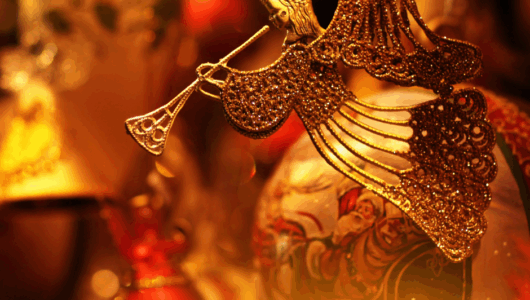
“Hark!” the herald angels sing,
“Glory to the new-born King;
Peace on earth and mercy mild,
God and sinners reconciled!”
Joyful, all ye nations rise,
Join the triumph of the skies;
With th’angelic host proclaim,
“Christ is born in Bethlehem!”
Refrain: Hark! the herald angels sing,
“Glory to the new-born King!”
Charles Wesley is said to have written at least 6,500 hymns. In 1739, “Hark! the Herald Angels Sing” became one more among his prolific output.
“Our theology is something that we’ve sung,” says Rev. Alfred T. Day III of the United Methodist Commission on Archives and History. “And we’ve sung it in a way to help us understand it and to help us feel and experience it at the same time. So it’s one thing for me to say, for example, incarnational theology. It’s another thing for me to say ‘Hark, the herald angels sing, glory to the newborn king.’” Day explains that Wesley “not only helps us sing our theology, but he helps us to understand what it is we really have to sing about and belt out with joy and inspiration.”
Wesley wrote this Christmas hymn in 1739 within a year of his conversion to the faith. He originally titled it “Hymn for Christmas Day.” As to Day’s reference to “incarnational theology, C. Michael Hawn of the Southern Methodist University theology faculty tells what that’s about: “Rather than citing the final phrase of Luke 2:14— “good will toward men” (KJV)—[Wesley] offers his theological interpretation—‘God and sinners reconciled,’” according to Hawn. “This is indeed a stronger theological statement.”
The multiple verses that Wesley wrote and that have later been rewritten are the objects of much theological analysis. One summary of the work as a whole by the Rev. Dr. Peter Johnston, an Anglican priest in Louisiana, states: “The paradox of the kingdom of God is that the things that seem least glorious turn out to be the most glorious. Yes, Jesus ‘lays his glory by,’ or as Paul puts it, he ‘emptied himself, by taking the form of a servant, being born in the likeness of men’ (Philippians 2:7). Yet we now glorify with great joy the one who lay his glory by, for he was ‘born that man no more may die.’ We celebrate the birth of Christ because by it, we receive our ‘second birth.’”
Contributed by Dave Edmark